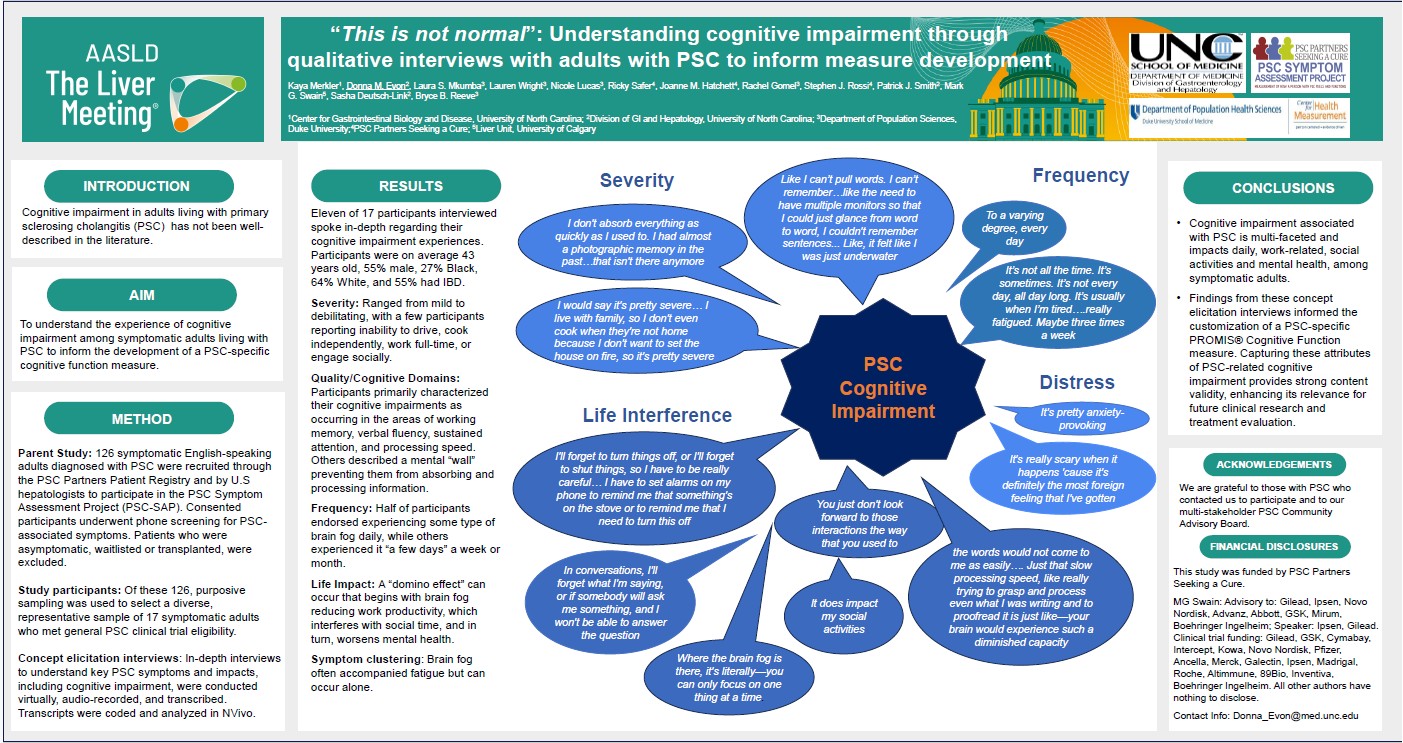



Many people living with primary sclerosing cholangitis (PSC) report problems with thinking clearly, often called “brain fog.” This can include trouble concentrating, finding words, remembering things, or processing information. Even though these symptoms can be very disruptive, they are often overlooked or misunderstood. Importantly, PSC-related brain fog is not the same as hepatic encephalopathy, a more severe brain condition related to advanced liver disease.
Understanding how people with PSC experience cognitive symptoms is important for researchers and clinicians to better measure, recognize, and treat these challenges.
Recruiting PSC participants for a 2025 cognitive impairment study
In 2025, adults with PSC were recruited through the PSC Partners Patient Registry and PSC liver specialists in the United States. Participants were screened for a variety of PSC symptoms, including cognitive difficulties.
Seventeen people were selected to take part in one-on-one interviews. These interviews were done virtually, recorded, and carefully reviewed to identify common themes related to thinking and memory problems.
What people with PSC reported
Out of the 17 participants, 11 described their experiences with cognitive impairment in detail. Participants ranged in age from 27 to 65, and over half also had inflammatory bowel disease (IBD).
The severity of brain fog varied widely:
- Some described mild but frustrating symptoms
- Others said it was debilitating, affecting their ability to:
- Drive
- Cook independently
- Work full-time
- Socialize or keep up with conversations
Common problems included:
- Difficulty remembering information (working memory)
- Trouble finding words or speaking smoothly
- Poor concentration and attention
- Slower thinking and processing speed
- Feeling like they “hit a mental wall” and couldn’t absorb new information
About half of participants experienced brain fog daily, while others noticed it several days a week or month.
Many described a “domino effect”:
- Brain fog reduced work productivity
- Less energy remained for social activities
- Negatively affected mental health and emotional well-being
Cognitive problems often occurred alongside severe fatigue, but some people reported brain fog even when fatigue wasn’t present.
How patients recognized that brain fog was PSC-related
Most participants felt confident that their cognitive symptoms were linked to PSC rather than stress, aging, or other conditions. They noticed patterns such as:
- Brain fog worsening during cholangitis infections
- Improvement after ERCP procedures or taking lactulose
- A strong link between cognitive symptoms and extreme fatigue
These patterns helped them distinguish PSC-related brain fog from other causes.
Why this cognitive impairment study matters to PSC
This study shows that cognitive impairment in PSC is real, complex, and life-altering for many people. It affects daily activities, work, relationships, and mental health.
The findings will help researchers develop PSC-specific tools to better measure cognitive symptoms. This is an important step toward better recognition of brain fog in clinical care and more accurate tracking of symptoms in research.
For more information on the survey methodology and findings, go to Understanding cognitive impairment through qualitative interviews with adults with PSC to inform measure development. Below is the survey summary poster.