




People living with primary sclerosing cholangitis (PSC) face a higher risk of developing cholangiocarcinoma (CCA), a rare bile duct cancer. Lifetime risk may be as high as 20%, yet current screening tools are limited and not always reliable.
To better understand how well PSC patients are informed about CCA risk and screening, PSC Partners and PSC Support conducted a global patient survey. The goal was to identify gaps in education and communication as new screening tools are being developed.
Key findings
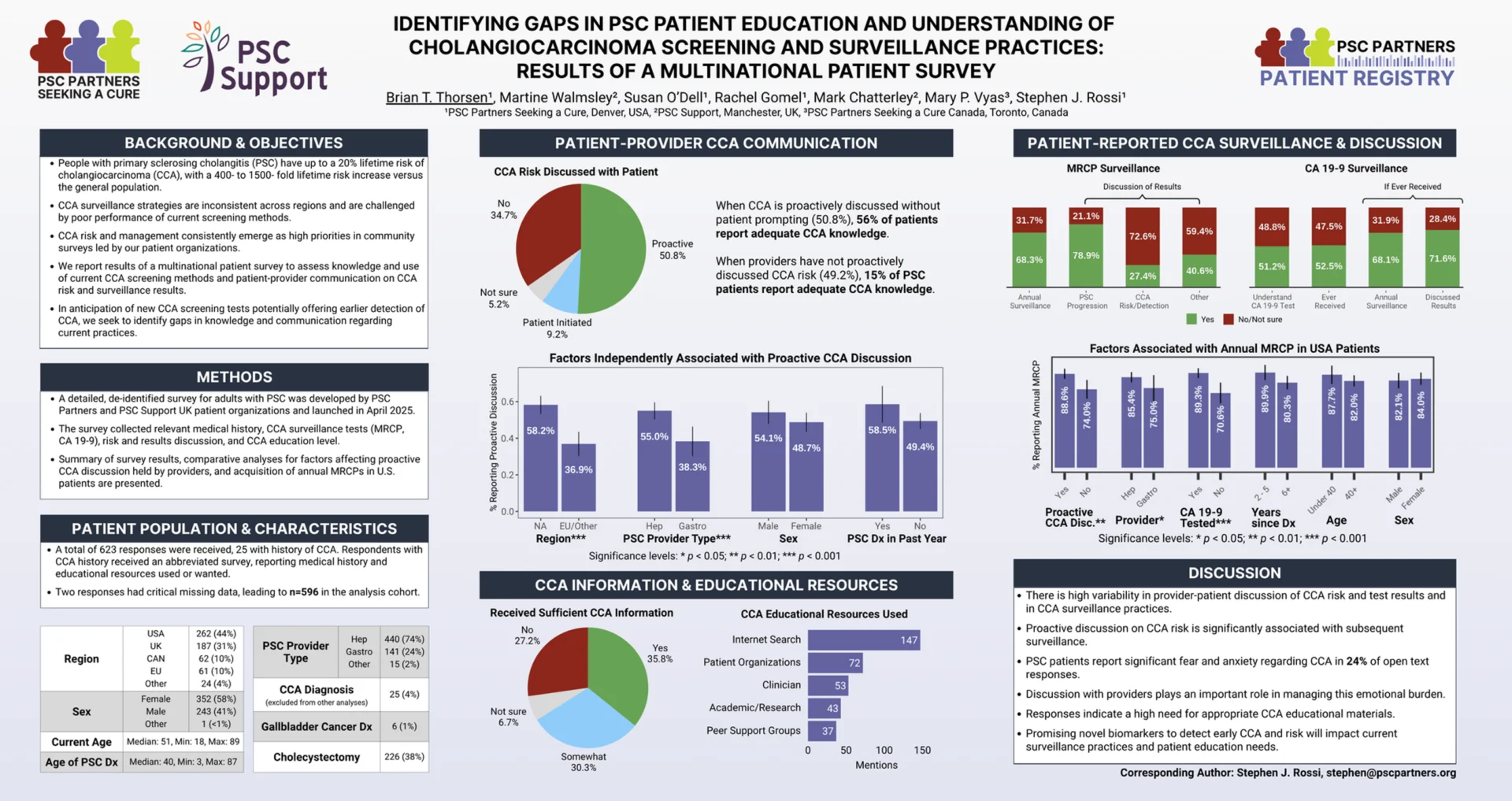
- Only 51% of patients said their doctor proactively discussed CCA risk and surveillance.
- Patients who had these conversations were much more likely to feel informed (56% vs. 15%).
- Patients in North America and those seeing a hepatologist were more likely to have CCA discussions than those in Europe or seeing a general gastroenterologist.
- 68% reported having annual MRCP scans, but many said results were not clearly explained.
- Only 36% of patients felt they had enough information about CCA overall.
Patient concerns
Many patients reported significant anxiety and fear about CCA risk and frustration with unclear or inconsistent screening practices. Most patients seek information online or from patient organizations rather than directly from their care team.
What this means for PSC patients
The survey highlights major gaps in patient education and communication about CCA. As new, non-invasive screening tests are developed, better provider-patient communication and education will be essential to ensure PSC patients receive clear, consistent, and supportive care.
This reinforces the importance of PSC patients worldwide participating in the PSC Partners Patient Registry to ensure full experiences are captured in publications.
For more information on the survey methodology and findings, go to “Identifying Gaps in PSC Patient Education and Understanding of Cholangiocarcinoma Screening and Surveillance Practices: Results of a Multinational Patient Survey”. Below is the survey summary poster.