



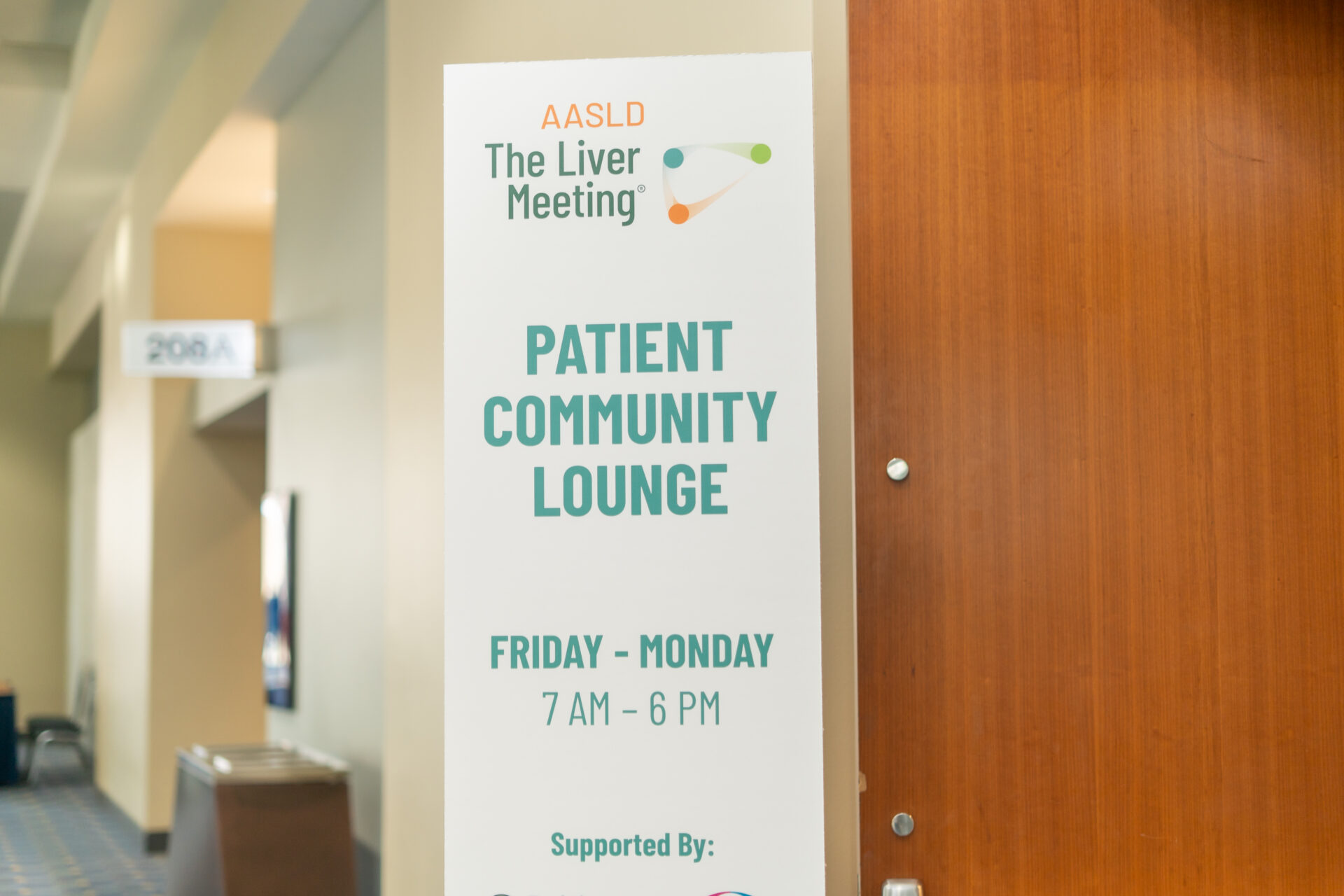
In November 2025, thousands of global experts gathered for The Liver Meeting® 2025, hosted by the American Association for the Study of Liver Diseases (AASLD), a professional association for doctors, scientists, and healthcare providers focused on preventing, curing, and treating liver diseases. The Liver Meeting® is recognized as the largest gathering of hepatologists and liver professionals in the world. PSC Partners Canada was there to represent the Canadian PSC patient community and for updates on groundbreaking research, guidelines, and advances in liver disease.
We attend to stay informed about new developments in PSC research and drug development as well as to connect with providers and researchers and ensure they know about our PSC Partners. We also have an opportunity to share patient-focused research developed with data collected through the Patient Registry in collaboration with our patient community and facilitated by PSC Partners.
PSC-Related Highlights from this year’s Liver Meeting:
- Patient-Driven Research: Research abstracts and posters highlighted work made possible through PSC Partners Seeking a Cure, PSC Partners Canada, and the PSC patient community. These presentations underscore the growing role of patient voices in shaping PSC research. Some of this work is led by the research team at PSC Partners and/or is collaborative work funded by PSC Partners. Four research abstracts and posters were presented by PSC Partners and PSC Partners Canada authors:
- The 9th PSC Forum convened. Part of the Liver Forum at the Forum for Collaborative Research, the PSC Forum aims to advance the regulatory sciences for the treatment of PSC by providing an independent and neutral venue for ongoing multi-stakeholder dialogue. The agenda included an update from PSC Partners WIND-PSC study, now in its 2nd year since launch.
- The International PSC Study Group (IPSCSG) met to give updates on international collaborative research underway and invited an update from PSC Partners on their patient-sponsored research agenda and initiatives.
- Engagement with researchers, pharmaceutical representatives, and regulators to learn about and contribute to drug trial design, endpoints, and patient engagement strategies.
- PSC Drug Development Updates:
- ELMWOOD Phase II Study in PSC: New interim results from the ELMWOOD trial show that the drug elafibranor continued to be generally well tolerated by PSCers and led to improvements in key liver blood tests and itching over up to 28 weeks. Participants who switched from placebo to elafibranor experienced rapid improvements, while those already on treatment maintained or improved their results. Blood markers linked to liver scarring stabilized or improved, supporting continued study of elafibranor in PSC. Detailed abstract can be found in #0005 in The Liver Meeting: 2025 Abstracts. Hepatology 82(S1):p S1-S2308, October 2025.
- SPRING Phase II Study in PSC: New data from the Phase 2 SPRING study show that nebokitug continued to be generally safe and well tolerated for up to 48 weeks in PSCers. Results from the open-label extension showed sustained improvements in blood markers linked to inflammation and liver scarring, including ELF score and liver stiffness—especially in people with more advanced disease. Additional posters provided insights into how nebokitug works, showing effects on immune cells (macrophages) involved in PSC progression. Together, these findings support continued study of nebokitug in PSC. See abstracts #4396, 4400, 4401 The Liver Meeting: 2025 Abstracts. Hepatology 82(S1):p S1-S2308, October 2025.
- Norucholic acid (NorUDCA): Following the first positive phase 3 trial news for PSC ever (released in the spring of 2025, abstract here) no new data on norucholic acid was released at this meeting, but norucholic acid remains part of broad discussions of potential PSC therapies.
- VISTAS Study: The VISTAS study of volixibat in PSC has completed enrollment, but no results were presented. Data from VISTAS has not yet been released and is expected later in 2026.
Patient and Patient Advocates at AASLD
AASLD has increasingly been making patient participation for patient advocacy groups, patient advocates, and research-focused patients available through accessible event pricing, patient programming, and a platform for patient-driven research to be shared. The Liver Meeting® has traditionally been held in the fall of each year. Patient and caregiver reduced registration fees are available and virtual attendance for some of the meeting is possible. The amount of education and programming content directly applicable to PSC varies each year. Patients and patient advocates increasingly play visible roles at The Liver Meeting® and in AASLD activities, including:
- Patient advocacy attendance: Invited patient representatives attend the annual meeting to bring the lived experience of liver disease directly into scientific discussions.
- Patient-focused sessions & panels: Sessions that address quality of life, patient-reported outcomes, equity, and unmet needs in liver disease.
- Research input & networking: Opportunities to engage with researchers, industry, and regulators to influence trial design, endpoints, and patient engagement strategies.
- Education access: Patient-friendly summaries, advocacy programming, and informal knowledge exchange that helps translate cutting-edge science back to patient communities.
Professional Hepatology Associations and Meetings
For more information about AASLD visit HERE.
The European Association for the Study of the Liver (EASL) hosts a spring meeting each year. For more information about EASL visit HERE.
The Canadian Association of Study of the Liver (CASL) hosts a winter meeting each year. For more information about CASL visit HERE.

 Monday, June 1, 2026